Smithing Templates — The Trim Recipe, Applied and Copied
The armor trim system runs on smithing templates: one template defines the pattern, one material defines the color, and the smithing table does the rest. Here is the whole flow - finding, applying, and the duplication loop that makes a look renewable. Updated November 04, 2026.
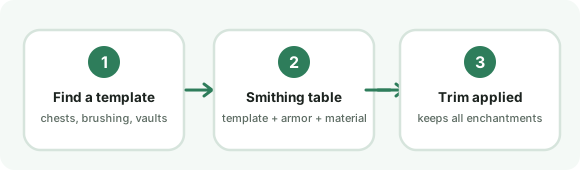
The three-slot recipe
The smithing table takes three inputs. Slot one is the template - the pattern definition (Sentry, Coast, Wayfinder and the other fifteen). It is consumed by the process, which is why duplication exists. Slot two is the armor piece - its base material (Iron, Gold, Diamond, Netherite) is the surface the trim sits on, which is why the same trim reads differently across bases. Slot three is the trim material - one of the ten materials from Iron to Quartz, consumed as an ingot or gem. Output: the same armor, same enchantments, same durability, wearing the pattern in the material color. Nothing about the item's stats changes, so there is no wrong trim - only looks you picked without previewing, which is what the tester is for.
Duplication: making the look renewable
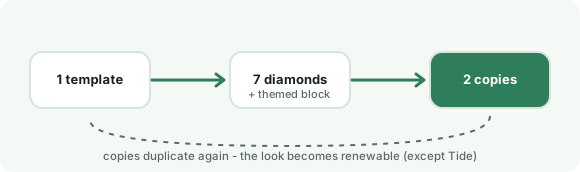
Almost every template copies itself: 7 diamonds + the template + one themed block, at the same smithing table. The themed block nods to the pattern's home - sandstone for Dune, end stone for Eye, netherrack for Rib, purpur for Spire, bone block for Snout, prismarine for Tide (ironic, since Tide is the one template that cannot be duplicated - it drops from elder guardians alone, so every copy costs a mini-boss fight). The economics are simple: a look you love costs one template to find and 7 diamonds per additional copy, so trimming a four-piece set in one pattern costs the original template plus 28 diamonds. Budget that before committing a rare template like Silence to fashion.
Common mistakes at the table
The classic errors all come from rushing. Putting the material in before the template gives you a refused recipe, not a ruined item - the table simply does nothing, so mistakes are cheap. Spending a rare template (Silence, Flow) on a test piece you do not actually wear is the expensive version of the same impatience; test looks on Iron armor with Iron trim first, since iron is infinite. And forgetting that trimming preserves nothing you would lose anyway means people sometimes delay trimming until "after enchanting" - unnecessary, since the order does not matter. Trim early, trim often, duplicate before you commit.
Where templates fit in progression
Trims arrive when you do: the overworld chest trims (Coast, Dune, Eye, Sentry, Wild, Vex) are available from casual exploration; deep-dark Ward and rare Silence reward ancient city runs; Nether fortress and bastion trips produce Rib and Snout as byproducts; End City ships carry Spire; the four archaeology trims come out of trail-ruins brushing; and the 1.21 trial pair (Bolt, Flow) sits at the end of the trial progression. The trim system is a completionist layer over the whole map - the locations table
Frequently asked questions
How do I apply an armor trim?
At a smithing table: place the armor trim template, then your armor piece, then a trim material. The output keeps every enchantment and stat - trims are cosmetic.
Can you duplicate armor trim templates?
All except Tide. The recipe is 7 diamonds plus one copy of the template plus a themed block (sandstone for Dune, end stone for Eye, netherrack for Rib and so on). Tide drops only from elder guardians, so each copy is a kill.
Do I lose my enchantments when trimming?
No. Trimming preserves enchantments, durability and everything else - the smithing table output is the same armor wearing decorative bands.